
Getting married and eating dinner in the same building sounds like the simple option, and mostly it is. No transport between sites, no losing half your guests to a bar in between, no second delivery window for the florist.
There is one piece of it worth understanding before you book, because it decides the shape of your entire evening: the room flip.
What a room flip actually is
If your ceremony and your dinner happen in the same room, that room has to be completely reset in between. Ceremony seating comes out, dinner tables go in, linen, place settings, centrepieces, the dance floor. It is a full reset of a large room, usually done at speed by a team who would rather be doing it well.
It is entirely normal. It happens at weddings across the city every weekend. But it has consequences you should plan for rather than discover.
It takes time. At Storys a full flip for a 170-guest seated dinner takes about an hour. That is a realistic number for a room of this size and you should expect something in that region anywhere, so if a venue tells you thirty minutes for a large room, ask what gets left out. Either way it is an hour of your evening, and it falls right in the middle of the part everyone remembers.
Your guests have to be somewhere else. This is the part couples underestimate. The reset cannot happen around 150 seated people. So the question is not really "is there a flip", it is "where do my guests go while it happens, and does that place feel like part of the wedding or like a corridor."
It compresses everything after it. A cocktail hour that becomes ninety minutes because the room is not ready pushes dinner, which pushes speeches, which pushes the dance floor into the last hour of a bar you are paying for.
The three ways venues handle it
One room, flipped. The most common arrangement, and the one to ask the most questions about. Where does the cocktail hour actually happen? A foyer, a terrace, a bar area, the sidewalk. Is it a real room with a real bar, or a holding area.
A separate ceremony space. A second room, so nothing has to be reset. Cleanest version, and the reason it is not universal is that most venues do not have the square footage to leave a room sitting empty.
A terrace or outdoor ceremony. Lovely, and in Toronto it needs a wet-weather plan that is written down rather than assumed. Ask what the rain call looks like, who makes it, and by when.
What a second floor changes
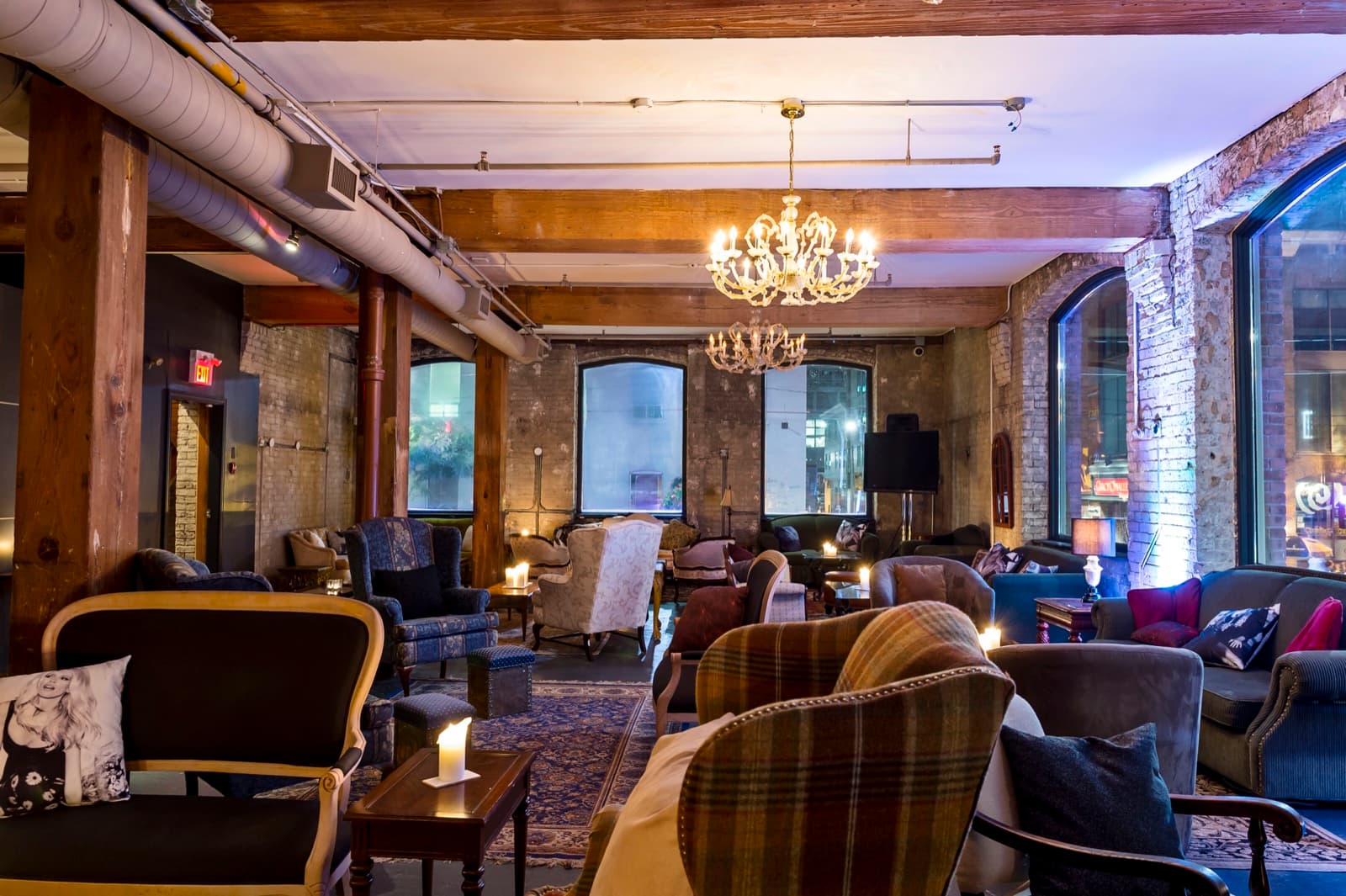
At Storys the building is two floors of just over 2,100 square feet each, and that is the whole difference. There is still a reset, and it still takes about an hour. What changes is that the hour happens in an empty room.
A typical Storys wedding uses both floors across the evening: the ceremony on one, then cocktails and canapes on the other while the first floor is turned over, then everyone comes back for dinner and dancing. Your guests spend that time at a bar in a finished room with the doors open, rather than standing in a lobby listening to chairs being stacked.
Two practical effects worth knowing:
The timeline stops being a compromise. The hour of reset and the hour of cocktails are the same hour, instead of two things competing for the same part of the evening. Your run of show is the one you wrote.
The two rooms photograph differently. Same building, same period detail, different light and different setup. Ceremony pictures and reception pictures do not all look like the same corner of the same room.
We can host the ceremony on site whichever way your guest count points, and the right configuration depends on your numbers. That is a conversation, not a package.
What to ask any venue about the flip
- Where do my guests physically stand during the reset? Ask to be shown that space on the tour, in the state it will be in.
- How long does the reset take for our guest count? Not the best case, the number they plan around. For a seated dinner of around 170, an hour is realistic.
- Is there a bar in the space my guests are in? A cocktail hour without a working bar is just waiting.
- Who runs the reset? In-house team or a third party. It affects how much of it becomes your problem on the day.
- What happens if the ceremony runs late? Every ceremony runs a little late. The question is what the venue absorbs and what gets cut.
- If there is a second space, is it included, or is it a separate rental?
Ceremony and reception at Storys
We are at 11 Duncan Street in the Entertainment District, in a building completed in 1925, with two floors of exposed brick and beam and in-house food and beverage. Ceremony, cocktail hour, dinner and dancing all happen here, and the second floor means the reset happens out of your guests' way rather than around them.
See the space, or talk to us about weddings and we will walk you through the configuration that fits your guest count.